

Around in Circles

I believe this may be a story without redemption.
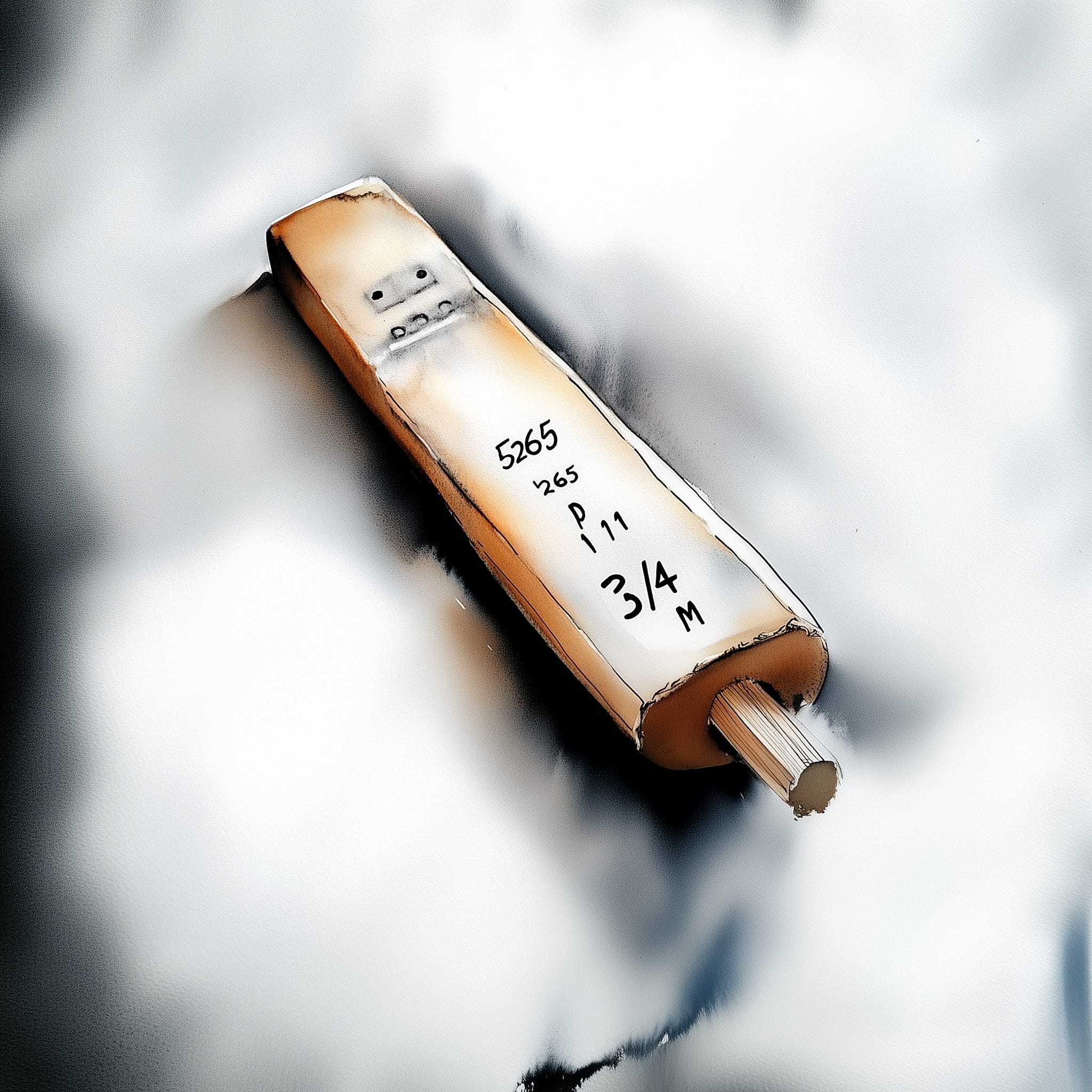
Some time ago, my father handed me a collection of square wooden pegs, each about the length of my palm and covered with numbers written on them in faded black and red felt-tip marker. The bottom of each is rounded like a dowel, but the top is a square. They looked almost like game pieces, every edge worn smooth at the corners through use. "You have to guess what they are," he said, in that way fathers sometimes do.
We played at the game for some time, but of course, I didn’t know what they were. Hardly anyone could have known.
These pegs were my grandfather's walking system — a method he devised to track his daily exercise as he circled the interior of his home in Beverly Hills, Florida. At each corner of his walking circuit, he had drilled a hole in some piece of furniture so that it would hold the dowel end of his tracker. As he turned each corner, he would turn a peg, tracking his progress many years before a Fitbit or Apple watch, avoiding both the heat and the people outside. The numbers were a reminder of how many laps were needed to meet what he felt was required.
Walk from dining room table to bathroom door. Twist.
Door to window. Twist.
All the way down to the porch. Twist.
Porch to Kitchen. Twist.
Back to start. Reset.
Fourteen to go.
There's something about my grandfather that resists easy metaphor. It would be convenient to say the walking system perfectly captured his essence — ingenuity paired with isolation, movement that never really went anywhere. But that feels too neat, too satisfying. The truth is messier.
His name was Edward Keefe, and before the pegs, there was archery. Before archery, there was drinking. Before the drinking stopped, there was Rita's ultimatum. She was my grandmother and had said something needed to change. And so the bow replaced the bottle, another way to spend hours after work. Ed found a new way to focus, to channel whatever it was that drove him to drink in the first place. He got good at it too. Eventually, he thought he should see how good and went to some amateur archery tournament and won. Rather than continuing to get better, he decided he’d stop competing. All those suckers had been trying for years to win, and all my grandfather had to do was quit drinking to beat them all. Not worth his time.
As teenagers, my father and uncle had decided it would be fun to shoot a bow too. They practiced together until the day Ed caught them shooting unsafely, someone standing in front of the shooting line. Ed's response was immediate and absolute: he snapped the bow in half. It wasn’t safe. No discussion, no second chance. Just the sharp crack of wood and the end of archery for his sons.
After archery, there was Spirit.
My father was the baby of the family, and weeks after he graduated high school, my grandparents sold the house and bought a ship. Well, it was the skeleton of a ship — wood and joints lying scattered and dry in a boatyard like bones in a valley. But they found a man who promised he could breathe life back into it, who said he could make the dead thing rise again, new timber knitting over the frame until Spirit could sail.
Spirit was meant to be a life for them. Twenty-five feet of dream. As soon as she was ready, they set sail for the Caribbean and spent years sailing. It was bold and risky and it worked — for a while. They lived aboard Spirit, sailing island to island, chasing the kind of freedom most people only dream about.
But like so many things, the dream didn't last. When Rita got sick, they sold Spirit and came back to shore for the chemotherapy. After she beat the first one, they just stayed in Connecticut, where the hospital had been. After she lost to the second, he sold the house and moved to Florida. I don’t know when he started with the pegs. I don’t know when he started to drink again.
Let me start over.
During the 18th and 19th centuries, when Ireland was occupied, the British authorities enacted laws that severely restricted Irish Catholic rights. Among these was a prohibition on Catholics carrying weapons or receiving military training. This presented a serious challenge for Irish who wanted to defend themselves or offer resistance. That was the point.
It was during this period that the shillelagh became particularly important. On its surface, it was just a walking stick — a humble tool for traversing the hills. But in reality, it served a double role: the Irish developed their own martial art around the shillelagh called bataireacht, which incorporated elements of European sword fighting techniques. British authorities couldn't easily ban carrying a stick without also preventing elderly people from walking.
In Irish mythology, wood itself was considered inherently magical, with different trees holding distinct powers and personalities. Blackthorn, the wood that many shillelaghs were traditionally made from, was particularly significant. Apparently, the folks who talk about traditional religion in Ireland say that blackthorn was strongly linked to the magic of protection and warfare. Some stories say that blackthorn helps keep away fairies and spirits, including the malevolent sluagh who were said to travel in hunting parties through the night sky. No story says blackthorn could have kept off The Great Hunger.
People talk about “the potato famine,” but while there was a disastrous blight, it was British policy that turned hunger into horror. They continued exporting food from Ireland's ports even as its people starved — ship after ship laden with grain while children died in ditches. The colonial British government made relief conditional on impossible terms, forced starving people to break rocks for food, and incentivized landlords to evict families into the winter cold. When the Ottoman Sultan tried to send aid, British officials blocked it because it would have embarrassed Queen Victoria — her donation had been smaller. Even the Choctaw Nation, themselves just 16 years removed from the Trail of Tears, managed to send help.
In the midst of it, my great-great-great grandfather took the family from County Cork to Wales. Whatever he was looking for, he didn’t find. In 1868, my great-great grandfather was born in Cardiff, but by 1870 the whole crew was living in Massachusetts. I live here still.
My father has two shillelaghs hanging on the wall in the home where we grew up. He got them from Ed, who said he got them from his father. I don’t know how far they go back.
"Do you know why I have these?" my father asked me once. His voice got quiet and heavy. "I keep them because they're a reminder that I decided never to hit you kids with these the way I was hit."
I wonder sometimes about what draws us to want to repair broken things.
I was never a good sailor, but I like the idea of sailing. I know the Irish part of my family were fishermen before they had to leave their shores and became stonemasons on these.
Between my Freshman and Sophomore years of college, I decided to spend a few weeks living with Ed at the cabin my family has. It isn’t much of a cabin, but it’s ours: that whole side of the family pitches in to keep the place open. He spent summers up there, nearer to us.
Nominally, I was there to work on repairing an old sailboat that hadn't been sailable for decades. And I did work on it. Ed taught me about fiberglassing and epoxy, about the grain of wood and the monotony of sanding. He wasn't gentle in his instruction, but my father had already started many of those lessons, so I bore his biting commentary well enough. The epoxy had a chemical bitterness that caught in the back of my throat, mixing with the musty smell of the rotten marine plywood I had to pull out and replace.
We mainly worked in the mornings. His hands trembled slightly, his knuckles swollen and angry-looking, like small, bright fruit. He had a tattoo on his forearm arm that was a large cursive P.B. He said it stood for “playboy,” and no one believed him, but he refused to say anything more about it. By lunch, he said his arthritis was so bad he needed to start drinking for the pain. In the afternoons, he usually napped. As far as I could tell, he went through a handle of vodka every two days. Sometimes we talked. He made sure I knew the British were bastards. He was fascinated with Jai alai, taught me how to bet on backgammon, and talked about what Cuba was like in the 70s when no one was “supposed to go there.” Apparently, he and Rita had gone anyway.
In his obituary, Ed was described as having “a long and varied work life.” That’s a polite way of saying he didn’t stick with anything long. He was a Marine and served aboard the aircraft carrier USS Leyte, but as far as I know, he was dishonorably discharged and didn’t want to talk about what happened. Then, he was a freelance photographer who took photos of horse races and grocery store baby contests. He moved from there to be an underwriter for an insurance company and later owned and operated a Surge milking machine service. Eventually, he partnered with a friend to open a construction business and worked there as a general manager.
He talked a lot about how, throughout the 1960s, his company helped build most of the McDonald’s across central Massachusetts. When they were building, he turned down multiple offers of partial franchise ownership as payment because they needed immediate cash for payroll. He complained about this missed opportunity even to me, decades later, fixated on a choice he never really had. If only he could have owned a part of a dozen McDonald’s… he could have been rich. On numerous occasions when we were out he showed me ones he built that are still in business. He could have been rich. He could have been something different.
Psychologists talk about “rumination” — the tendency to walk the same mental paths over and over, wearing grooves into our thoughts. The word itself comes from the way cows digest food, chewing, swallowing, bringing it back up, chewing again. The medical literature describes it clinically as “a cycle of negative thoughts characterized by a passive focus on distress, perceived failures, and lost opportunities.” Rumination is feedback loops and reinforcing cycles, each return to a thought making the next return more likely, until the path becomes so worn it feels like the only way forward.
As Ed told it to me, the construction company ended because he got fed up with it. His business partner died and his sons had started fighting over ownership. Ed didn’t want to deal with their bickering, so he just walked away from the whole thing. Sometimes I wonder if he left to give them control, if there was a hidden generosity in his departure. I think it is more likely that he just couldn't stand the squabbling. He wasn’t a patient man. I think about what it must have been like to be my grandmother, about what you would feel when you learned your husband had given away his portion of a company he founded just because he didn’t want to have to deal with frustration.
But somehow, he liked me.
He told me that. Told me that I was smart, that he was glad I was the first person to go to college in my family, and that if I learned how to actually be useful with my smarts, I might be a good man. That I shouldn’t trust the government. He liked that I wanted to learn to fix the sailboat. I wondered if he thought about Spirit, but I never asked him.
The very first time I took out our repaired boat, I capsized it and lost the daggerboard.
At first, he just made fun of me. But when he found out I had dropped the board, he was angry. Then he was sad. I was embarrassed. The boat only sailed that one time after I finished it. We never replaced the part that is sitting at the bottom of the lake. Somewhere down there, it is still sitting, not helping anything at all to stay on course. The boat itself is covered but surely rotting again, wrapped once more in old tarps and strapping, a rough beast slouching under the house.
My mother told me once that I was too much like the worst parts of my father. She didn't mean it unkindly, but it was a criticism. Because if I'm too much like my father, then I must be something like Ed too. Echoes in an empty hall. I catch myself sometimes being sharp with my own daughter or withdrawing when I should engage. I wonder how many generations it takes to untie pain.
I wonder what Ed thought about when he walked. The wooden pegs are worn smooth by repetition. These things were used. He paced in circles in an empty house, counting his steps, avoiding the heat and the people outside. They measured his solitude. I’ve learned that silence can be its own inheritance.
We want stories to have arcs, to bend toward understanding or revelation or justice. We want to see the gun from the first act be fired in the third and to have bitter men be softened, circles spiraling up and outward into something more. But circles do not always rise, bows remain broken, ships stay unsailed, and war clubs hang on the wall.
Some stories we choose to tell, each once louder for the quiet of all the ones we decide to keep to ourselves.